
Rocks Gone: $10.3M in quotes in the first 3 months
 Written by Michael Nadalin, Founder of Market Lead and Harvest Lead · Last updated 25 August 2026
Rock crushing machinery, Australia and the USA. A leads and sales system built from scratch for a six-figure machine, taking a field-day business to $10.3M in quotes in its first three months.
The situation
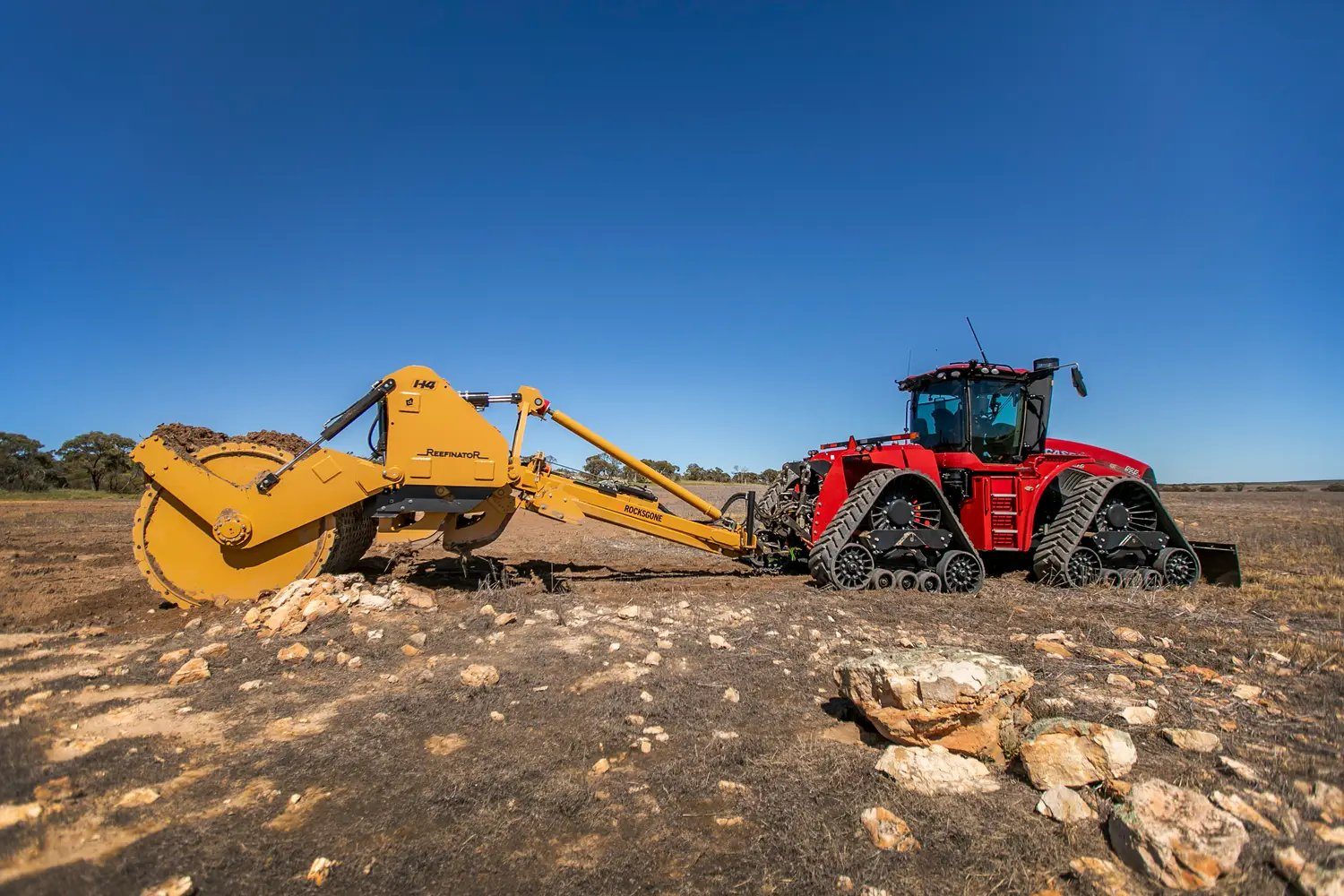
Rocks Gone sells the H4 Reefinator, a six-figure machine that crushes surface rock where it sits and turns stony ground into workable paddock. The buyer is narrow: a farmer or contractor with the land, the rock type and a tractor big enough to pull it.
Sales had grown through field days and farm visits. There was no advertising history, no way to qualify a buyer before driving out to see them, and field-day enquiries arrived on a form nobody could track. The business was also expanding into the USA, where cold outreach was expensive.
What we built
- Separate campaigns and landing pages for Australia and the USA, so each market saw its own message and its own numbers.
- A short qualifying flow on every form: land size, rock type, tractor size, and whether the buyer wants to own a machine or hire a contractor.
- Google search campaigns on the brand and on the problems the machine solves, capturing rock removal and deep ripping searches.
- Meta campaigns split by country, led by the main machine video, with a customer testimonial video and demo day promotions alongside.
- A CRM where every lead lands with its answers attached, calls are recorded and transcribed, and each buyer moves through farm visit, quote sent and quote accepted.
The part that actually made the difference
The qualifying questions. On a machine like this, the expensive part of the sale is the farm visit, not the click. A visit to a buyer with the wrong rock or a tractor too small to pull the machine costs a day and goes nowhere.
Asking land size, rock type and tractor size up front means the sales team knows who to call first and what they are walking into before they dial. The own or hire question splits the buyers from the people who want the job done, and both are worth having, just not on the same call.
| Channel | Result | Benchmark |
|---|---|---|
| Google search click-through rate | 9.95% | 5% to 10% for high-intent commercial search |
| Meta link click-through rate | 1.48% | 0.8% to 1% |
| Main machine video on Meta | 96 of 152 Meta leads at $32.44 each | Carried the account |
What changed for the sales team
In the first three months the CRM recorded 13 farm visits, 12 quotes sent and 2 quotes accepted, and four demo days ran in five weeks. The team now spends its time on visits and demos with buyers who have the land, the rock and the tractor.
In the words of Adrian Carr, Global Business Development Manager: "Everyone’s thrilled. You know, absolutely. The volume’s great."
Opening a second country without cold outreach
The USA was a new market with no brand recognition and no dealer network doing the selling. Running it as its own campaigns and its own pages, rather than as an extra country on the Australian account, meant it could be judged on its own numbers. It came in at $34 a lead, below the blended $44.
Common questions
- What did Harvest Lead do for Rocks Gone?
- We built the acquisition system from scratch: separate Australian and USA campaigns and landing pages, a qualifying flow covering land size, rock type, tractor size and own or hire, Google search on the problems the machine solves, Meta campaigns split by country and led by video, and a CRM tracking every buyer from farm visit to quote accepted. It produced $10.3M in quotes from 162 leads at $44 each in the first three months.
- Is $10.3M in quotes the same as $10.3M in sales?
- No. It is the value of quotes issued in the first three months. A six-figure machine has a long buying cycle, so quotes are the leading indicator, and the CRM tracks each one through to accepted so sales can be matched back to the campaign that produced them.
Want this built for your business?
We map your search demand, show you where the sales-qualified leads are hiding, and tell you what it would take. No obligation.
Book a strategy call