Agricultural machinery marketing that produces sales-qualified leads
Most agencies sell you traffic and call it marketing. Machinery does not work that way. A header is an 18 month decision made in a tractor cab with no reception, and the number that matters is the invoice, not the form fill.
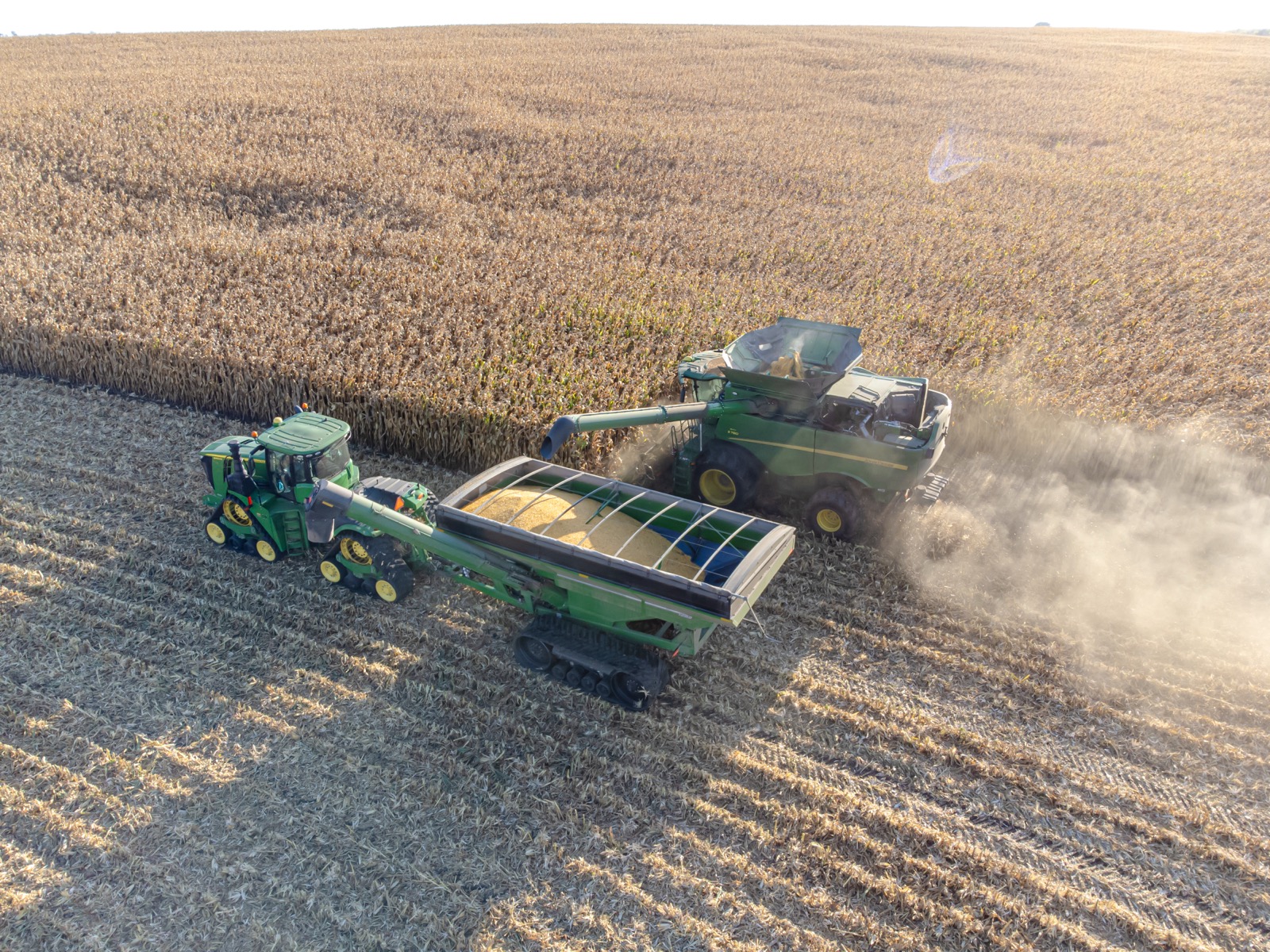
What agricultural machinery marketing actually has to do
Agricultural machinery marketing is the work of putting a specific machine in front of the small number of Australian buyers who are genuinely in market for it, capturing them before a competitor does, qualifying them so your sales team is not chasing tyre kickers, and tracking each enquiry through to the sale so you know which spend produced revenue.
That is a longer definition than most agencies use, and every clause in it is doing work. Miss the qualification step and your sales manager spends his week on people who were never going to buy. Miss the tracking step and you cannot tell a $180k sale from a brochure download, so you optimise toward the wrong thing for a year.
Why the generic agency playbook fails on machinery
The standard e-commerce or local-services playbook assumes high volume, short consideration and a cheap unit. Machinery is the opposite on all three, and the playbook breaks in predictable ways:
- Volume is tiny. A category might have a few hundred genuine buyers in Australia in a year. Optimising to cost per lead pushes you straight into the cheap, unqualified end of that market.
- The cycle is long. Three months at the fast end, closer to 18 for a new header or self-propelled sprayer. Dealers write enquiries off at 30 days because the CRM said no answer, while the buyer was still comparing them against two other dealers.
- Seasonality is not the financial year. The budget calendar is the ag calendar. Scaling in November because the quarter ends is how you buy your worst leads at your highest price.
- Reception is bad. A farmer fills in your form at 6am and is out of range by 8. Speed to lead is not a nice-to-have, it decides who gets the call back.
- Form fills lie. Without offline conversion tracking, the platform optimises toward whoever fills in forms most readily, which is rarely whoever buys most readily.
Machinery marketing vs the generic agency playbook
The same budget produces a different outcome depending on which set of assumptions it is spent under. This is the practical difference:
| Decision | Generic playbook | Machinery approach |
|---|---|---|
| Primary metric | Cost per lead | Cost per tracked sale |
| Bidding target | Maximise conversions on form fills | Target CPA on verified enquiries, value-based once offline data flows |
| Retargeting window | 30 days | 3 to 18 months, matched to the buying cycle |
| Budget calendar | Financial quarters | The agricultural season |
| Form design | Fewest possible fields | Qualifying fields: machine type, timeframe, operation size |
| Price on page | Hidden behind contact us | Published, at least as a band |
| Success signal | Lead volume up | Sales team closing a higher share of fewer enquiries |
The four stages we build
We do not sell channels in isolation. The system is one pipeline with four stages, and a gap in any stage shows up as lost revenue somewhere else.
- Attract. Search, Performance Max and paid social pointed at genuine purchase intent, with the browsing and research traffic negatived out rather than paid for.
- Capture. Landing pages built for one machine and one job, with specs, freight and finance answered on the page instead of behind a phone call.
- Qualify. Friction placed in the form rather than in the phone call, so budget, timeframe and fit are known before your sales team picks up.
- Convert. Speed-to-lead follow-up, CRM visibility, and offline conversion tracking that feeds the actual sale back to Google and Meta so the platforms optimise toward revenue.
What we run
Three channel disciplines, built to work as one system. Each has its own page:
- Google Ads for farm equipment and machinery, including Search, Performance Max, Shopping and the search-term hygiene that stops the budget leaking.
- Meta advertising for agribusiness, for the buyers who are not searching yet and the retargeting most dealers never build.
- Machinery landing pages and lead qualification, where enquiries are won or leaked.
How we know it is working
The reporting question we answer is not how many leads, it is which spend produced which sale. That means offline conversion tracking wired from your CRM back into Google and Meta, so a $180k invoice is visible to the platform that produced it.
It also means we will tell you when a channel is not carrying its weight. On a low-volume, high-value account the honest answer is often to hold spend rather than scale it, and an agency paid on a percentage of media has no incentive to say so.
Reference: Google Ads Help: About offline conversion imports, Australian Bureau of Statistics: Agriculture
Who this is for
We work with Australian agricultural machinery and equipment manufacturers and dealers, rural trades and services, agtech, livestock and farm-supply businesses. It is a good fit if:
- Your average order value is high enough that a handful of extra sales a year changes the business.
- You have a sales team or a sales process, so a qualified enquiry can actually be converted.
- You are willing to connect your CRM, because tracking to the sale is not optional in this system.
It is a poor fit if you want the cheapest possible cost per lead, or if enquiries land in an inbox nobody reads until Friday.
Common questions
- What is agricultural machinery marketing?
- Agricultural machinery marketing is the work of putting a specific machine in front of the small number of Australian buyers genuinely in market for it, capturing them before a competitor does, qualifying them into sales-qualified leads, and tracking each enquiry through to the invoice. It differs from general digital marketing because the volume is low, the consideration cycle runs three to eighteen months, and the buyer is often in a paddock with no reception.
- What is a sales-qualified lead?
- A sales-qualified lead is an enquiry verified as a genuine buyer with intent, budget and fit, ready for your sales team to close. Harvest Lead builds the tracking, scoring and follow-up that turns raw enquiries into sales-qualified leads, rather than counting form fills.
- How long before we see results?
- Search campaigns pointed at existing demand can produce qualified enquiries in the first fortnight. The machinery buying cycle is three to eighteen months, so the revenue those enquiries produce lands later. That is why we track to the invoice rather than judging an account on its first month of form fills.
- Do you work with dealers as well as manufacturers?
- Yes. The work differs: a manufacturer usually needs national demand and a dealer network fed with qualified enquiries, while a dealer needs territory-level demand and a fast local sales response. Both run on the same four-stage system.
- Do you only work in agriculture?
- Harvest Lead is the agriculture and machinery arm of Market Lead, which has managed over $115M in ad spend across many industries. The agriculture specialism is deliberate: rural buying behaviour, seasonality and reception are not things you learn on a general account.
- How much does agricultural machinery marketing cost?
- Harvest Lead is a flat $5k per month investment excluding GST, covering Google Ads, Meta Ads, landing pages, integration, reporting and CRM management. Advertising spend is separate and paid directly to Google and Meta from your own accounts. We do not charge a percentage of media, because that model pays an agency more to spend more on a seasonal account where the right answer is often to hold.
Want this built for your business?
We map your search demand, show you where the sales-qualified leads are hiding, and tell you what it would take. No obligation.
Book a strategy call