The anatomy of a machinery landing page that actually books inspections
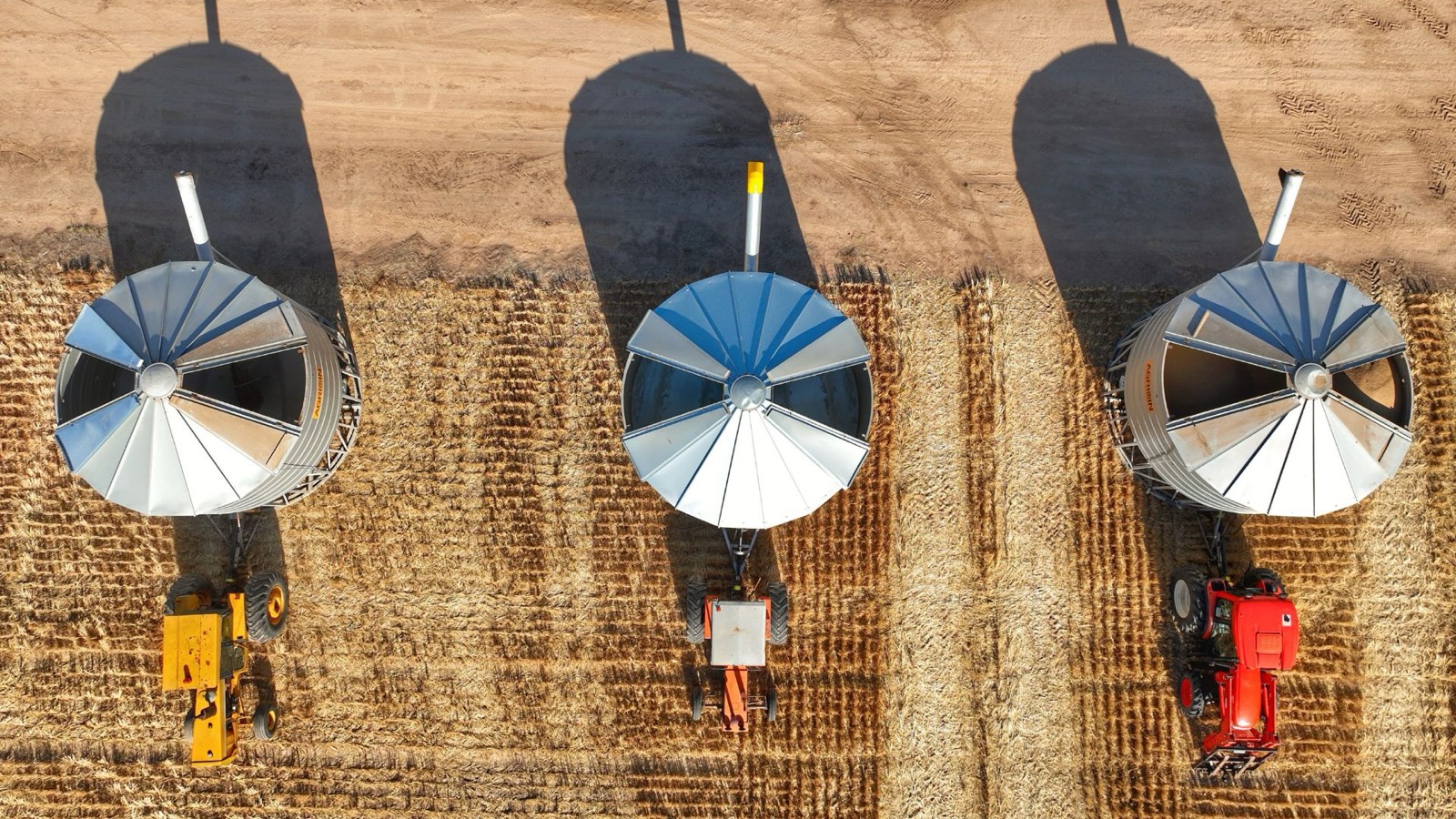
Why most machinery landing pages fail before the fold
I have run agriculture marketing campaigns for machinery dealers, ag equipment importers and gear manufacturers across Australia, and the pattern is almost always the same. The ads are fine. The traffic is fine. The page is the problem.
Here is what usually goes wrong. The dealer sends every click to the homepage, or to a product page that was built for someone who already knows the brand. A bloke in a ute outside Wagga taps your Google Ads listing at 6am, lands on a page that says "Innovative Solutions for Modern Agriculture", and he is gone in four seconds. He was not browsing. He had a specific job in mind and he wanted to know if your machine does it.
Rural buyers are not hard to convert. They are hard to waste time on. They will read a 2,000 word page about a header front if it answers their questions, and they will bounce off a beautiful page that does not.
The hero: name the machine, name the job, show the thing
Your first screen has one job. Tell the visitor they are in the right place.
I want the model or category in the headline, the actual job it does underneath, and a photo of the machine working in a paddock that looks like theirs. Not a render. Not a stock shot of a smiling agronomist holding a tablet. A real photo, ideally with dust on it.
A headline like "12m self-propelled boom sprayer, built for tight spraying windows" beats "Precision application technology" every single time. The second one sounds like a company talking. The first one sounds like someone who has actually been caught out by three days of wind.
Then one button. Book an inspection, request a quote, check availability. Pick the one that matches how you actually sell, and use the same words in the ad so the click feels continuous.
Specs, finance and freight: the three things that kill enquiries
If a farm equipment buyer cannot answer these three questions on your page, they will go and find a competitor who will answer them. Every time I add these properly to a page, form fill rates move, and more importantly the quality of the enquiry moves.
Specs need to be scannable. Horsepower, working width, tank or bin capacity, hydraulic requirements, tractor compatibility, hours if it is used. Put them in a plain table. Do not bury them in a PDF download, because half your traffic is on a phone with two bars of signal.
Finance is the one dealers underplay. A lot of agricultural machinery purchases are decided on monthly repayment and end of financial year timing, not sticker price. Show an indicative repayment range, say what deposit is typical, and name the lenders you work with. If you offer instant asset write off guidance, say so.
Freight and delivery matters more than city marketers realise. A buyer in the Riverina wants to know if the machine gets to them, when, and roughly what it costs. Silence on delivery reads as "this is probably not for you".
How many form fields is too many?
Short answer: it depends whether you want volume or sales-qualified leads. I lean towards fewer fields plus one or two smart qualifiers.
Name, phone, postcode, and a dropdown for what they are trying to do. That is usually enough. Postcode is doing real work there, because it tells your sales team whether this is a 40 minute drive or a freight job, and it lets you segment reporting by region later.
Add a field asking about timing. Something like "When do you need it?" with options for before harvest, before spraying, next financial year, just researching. That single question sorts your pipeline better than any lead scoring tool. A buyer who says "before harvest" in July is a phone call today. A researcher goes into a nurture sequence and gets called in six weeks.
Phone number should be tap to call on mobile and visible on every scroll. A big chunk of machinery leads never fill in a form. They ring while standing next to the machine they are replacing.
One thing I will push back on: do not gate the specs behind the form. Trading information for a phone number works in software. In agricultural machinery it just makes people leave and google the model number instead.
Proof that works on a farm, not proof that works on LinkedIn
Logos of industry bodies do very little. What moves a rural buyer is another operator, in a recognisable region, describing a specific outcome.
Two lines from a grower near Horsham saying the machine cut his spraying window by two days is worth more than a paragraph of five star review copy. Video is better again, filmed on a phone, no music, no captions bouncing around. The rougher it looks, the more it gets believed.
Show the machine in the conditions your buyers actually work in. Heavy clay, stubble, hills, dust. If your photography all looks like a European brochure shoot, people quietly assume the machine was built for European paddocks.
Also worth adding: how long you have been in the region, how many units you have in the field, and who fixes it when it breaks at 11pm during harvest. Service backup is a genuine buying objection in this market and almost nobody addresses it on the page.
- Two lines from a grower near Horsham about cutting his spraying window by two days
- Video filmed on a phone, no music, no bouncing captions
- The machine in heavy clay, stubble, hills and dust
- How long you have been in the region and how many units are in the field
- Who fixes it when it breaks at 11pm during harvest
- Logos of industry bodies
- A paragraph of five star review copy
- Photography that looks like a European brochure shoot
- Awards nobody in the paddock has heard of
Track to the invoice, not the form fill
This is the part most machinery businesses skip, and it is the part that decides whether your marketing budget is actually working.
A form fill is not a result. On a decent page running Google Ads against high intent model searches, I would expect cost per lead to sit somewhere in the $80 to $250 range depending on the machine and how competitive the category is. Meta Ads will often deliver leads at $25 to $70, and a chunk of those will be tyre kickers. If you judge both channels on cost per lead alone, you will kill the channel that is quietly producing the sales.
So push the data through. Every lead gets a source and campaign stamped on it in your CRM. Your sales team marks the outcome: qualified, quoted, sold, dead. Feed the sold value back into the ad platforms as an offline conversion. Suddenly you can see that the $220 lead from a model specific search converts at one in four, and the $30 lead from a broad interest campaign converts at one in forty.
With a sales cycle that can stretch from a few weeks to a whole season, you need patience with this. Do not judge a campaign on 30 days when your buyers are waiting for the machine to be paid for after harvest. Look at a rolling 90 day window and match enquiries back to invoices.
Build the page around the buyer's real questions, keep the form honest, then measure the thing that actually pays the bills. That is the whole game.
- Stamp source, campaign and keyword on every lead in the CRM
- Track quoted and sold, not just enquiry count
- Send offline conversions back to Google and Meta so bidding optimises towards buyers
- Review on a 90 day rolling window because machinery does not sell on a 30 day cycle
The page changes with the season, or it stops working
Machinery buying runs on a calendar and the page should too. A header page that says book an inspection in mid-January is talking to a bloke who is already three weeks into the job and cannot buy anything. The offer, the headline and the call to action all need to shift with the window.
Timeframes here are for a southern NSW and Victorian broadacre pattern. Shift them for your district, but keep the shape. Buyers start looking well before the pointy end and they will not be rushed.
One more thing on timing. The lag between first click and signed order on machinery over $100k is commonly three to nine months. If you judge a campaign at 30 days you will switch off the thing that was about to work. Judge lead volume and quality at 30 days. Judge revenue at 180.
Why your page has to catch the buyer who is not ready yet
Machinery does not sell like a $90 product. An enquiry in April can close in October, after a demo, a finance approval and a season that either went well or did not. If you judge the page on how many people bought this month, you will kill a page that is working.
Season drives everything. Enquiry volume lifts ahead of the spraying window and again before harvest, then goes quiet while everyone is actually in the paddock. Your page and your budget should move with that, not against it. Running flat spend through a harvest window and then panicking at the cost per lead is a mistake I see constantly.
Practical version: build the page so the not yet buyer leaves something behind. Spec sheet download, price list, demo booking. Then follow up with him for months, not days. That is where a big slice of the revenue actually sits.
Two questions before you go
Answer them and you will know whether your page is built for the buyer or for the brand.
-
1. A buyer wants your full spec sheet. Do you put it behind the form?
Put them on the page. Trading information for a phone number works in software. In agricultural machinery it makes people leave and google the model number instead, and they find it on a competitor's page. Plain table, above the fold on mobile, never a PDF download, because half your traffic is on a phone with two bars of signal.
-
2. Meta is delivering leads at $30 and Google at $220. The board wants the Google budget moved. What do you show them?
Enquiry to sale rate. The $220 model specific lead converts at around one in four. The $30 broad interest lead converts at closer to one in forty. On cost per lead the cheap one wins and you kill the channel producing the machines. And use 90 days, because your buyers are waiting for the machine to be paid for after harvest.

Want this system built for your business?
Harvest Lead builds lead and sales systems for agriculture and machinery businesses across Australia. Book a call and we will map your search demand.
Book a strategy call