How to sell farm machinery on Facebook and Instagram without discount-chasers
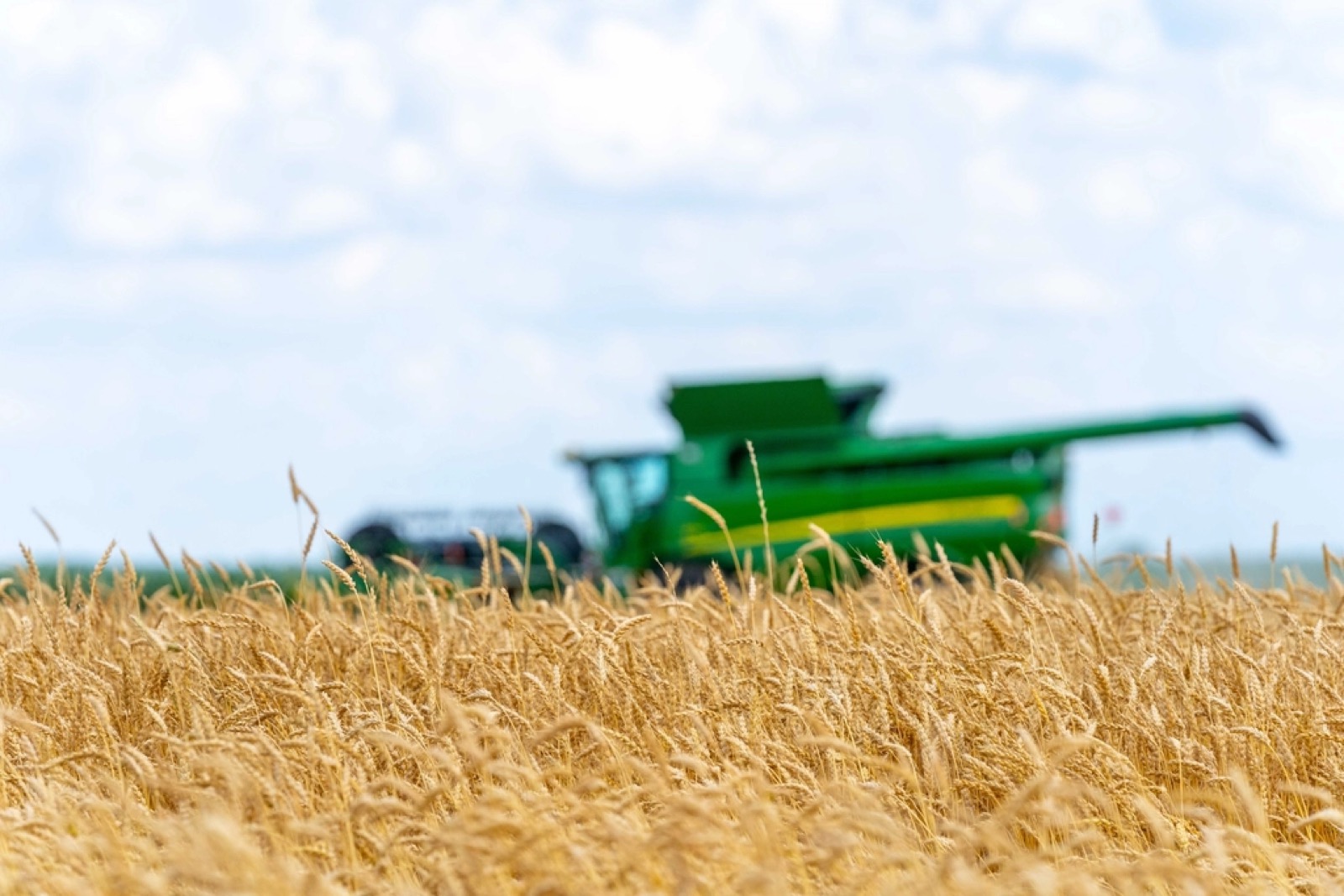
Why your machinery ads keep pulling tyre kickers
I get sent a lot of ad accounts from machinery dealers and manufacturers, and the story is nearly always the same. The ads work. That is the problem. They work so well at getting cheap clicks that the inbox fills up with people who will never buy.
Here is what I have found running agriculture marketing across Australia. Meta will give you exactly the audience your creative asks for. If your ad says "end of financial year clearance" and shows a red banner, Meta learns to find people who click red banners. Those people exist in the tens of thousands. Almost none of them have a shed, a herd, or 400 hectares to cover before the spraying window closes.
So the fix is not more targeting. It is making your ad harder to respond to. That sounds mad until you do it once. The volume drops, the sales go up, and your sales rep stops burning two days a week ringing people who wanted a photo for their Facebook group.
Put the number in the ad, even if your dealer principal hates it
This is the single biggest lever and it takes ten minutes. Put a price, a price range, or a finance figure in the ad and on the landing page. Not "contact us for pricing". An actual number.
Every dealer I have said this to pushes back with the same line: we do not want to scare people off. Mate, scaring people off is the entire point. A $180,000 self-propelled sprayer is not an impulse buy. The bloke who is out of the market at $180k was never going to buy at $172k either. All you did was pay to talk to him.
In my experience the cost per lead roughly doubles or triples when you add the price. I have seen accounts go from $18 a lead to $70 a lead. Everyone panics for a week. Then the quote rate off those leads climbs and the sales team starts answering the phone with actual interest, because now the leads are worth something.
If you genuinely cannot publish a price because of manufacturer agreements, publish a qualifier instead. Finance from $X per month. Suits operations running Y head. Minimum order Z units. Anything that makes an unqualified person self-select out before they cost you a click.
- A real price or a tight range, plus GST, in the ad copy
- Finance figure per month with the term stated
- Farm size, herd size or hectares the machine is built for
- Honest lead times, including the ugly ones
- A qualifying question on the form about current equipment
- Narrow interest targeting to "fix" a broad offer
- Discount and clearance language on high ticket gear
- Instant forms with three easy fields and nothing else
- Competitions or giveaways attached to machinery ads
- "Free quote" as the entire offer
Who actually deserves your Meta budget in the bush
Rural buyers are on Facebook. Heavily. Do not let anyone tell you otherwise because they read a report about young people leaving the platform. Farmers are on Facebook at 6am and again at 9pm, and half the machinery trade in this country happens in buy-swap-sell groups.
But the way you reach them matters. I run these in a strict order and I will not spend a dollar on the bottom rungs until the top ones are saturated. On most agricultural machinery accounts the top three tiers will happily absorb $3,000 to $8,000 a month before you need anything colder.
One thing that surprises people: your customer list is the best asset you own and most dealers have never uploaded it. Five years of service records, parts buyers, warranty registrations. Upload the lot, then build a lookalike off just the ones who bought a machine over $50,000. That lookalike will outperform anything you can build by hand.
Time the campaign to the season, not to your quarter
Farm equipment leads do not arrive on a smooth line. They arrive in bursts tied to the calendar the buyer lives by, and if you are running flat budget all year you are overpaying in the quiet months and underspending when the money is actually moving.
The pattern I see across cropping and broadacre clients in the eastern states runs roughly like this. Adjust it for your region, because northern NSW and the Wimmera are not the same market, and irrigated country runs its own clock entirely.
The practical version: build your audiences and your retargeting pool in the quiet windows when clicks are cheap, then push budget hard when buyers are actually deciding. Retargeting built in February is what makes your July campaign cheap.
The follow-up is where most machinery leads die
I have watched dealers spend $6,000 a month on ads and then let leads sit in an inbox for four days. If your response time is over an hour, you are not running a lead system, you are running a very expensive email newsletter.
High ticket agricultural machinery is a considered purchase. The buyer might enquire in April and sign in September. That means the follow-up cannot be one call and a shrug. It has to be a sequence that survives a five month gap without annoying anyone.
Speed to first contact is the one number I would fix before touching the ad account. Under five minutes and you will hold a conversation. After two hours you are leaving a voicemail for someone who has already rung two other dealers.
Track to the sale or you are guessing
This is the part almost everyone skips and it is the reason so many dealers think Meta Ads do not work for agricultural machinery. They measure form fills. Form fills are not the product. A signed order is the product.
Get the sale value back into the platform. Meta's offline conversions, a CRM integration, or at minimum a monthly manual upload of closed deals matched by email and phone. Do the same on Google Ads with offline conversion imports. Once the algorithm is optimising toward $95,000 orders instead of toward form submissions, everything changes, and it usually takes six to eight weeks to show.
Here is a realistic shape for a machinery account once the price filter and the follow-up are in place. Your numbers will differ by machine class, but the drop-off pattern holds. Note how small the final bar is, and note that it is still a very good month.
Run the maths on that last row before you complain about a $90 cost per lead. Forty leads at $90 is $3,600 of media. Three machines sold. If your average order is $70,000 and your margin is even 12 percent, that is $25,000 of gross profit on $3,600. Nobody who does that sum ever asks me to chase cheaper leads again.
One last thing. Judge this over a full season, not a fortnight. Sales-qualified leads in this industry take months to convert, and if you kill a campaign in week three because the cost per lead tripled, you have thrown away the exact filter that was working.
How long does a machinery buyer actually take?
Long. Longer than your reporting window, which is why Meta gets blamed for leads that were always going to take five months.
A sixty thousand dollar side by side might close in a fortnight. A four hundred thousand dollar header will not. I plan campaigns against the season, not against the month, and I tell dealers up front that a lead generated in August might be an invoice in December. If you kill a campaign at day thirty because the pipeline has not converted, you are turning off the thing that filled the pipeline.
The practical version is this. Run cold prospecting continuously at a modest daily budget, and lift spend into the windows where the decision actually gets made. In most of southern Australia that means the run up to spraying, the weeks before harvest, and the June thirty scramble when the instant asset write off and tax planning suddenly make everyone decisive.
What I would do first if this were your account
Kill the instant lead form on anything over $30k. Replace it with a landing page carrying four qualifying questions and a demo or trade-in offer. That one change does more than any amount of audience fiddling.
Then get the CRM outcomes flowing back into Meta so you are optimising towards sold machines. Then film the walkarounds, because video viewers are the cheapest high-intent audience available in this category and almost no dealer in Australia is building that asset.
Give it a full season before you judge it. A three month sales cycle means a three month lag before the numbers tell the truth, and a lot of good campaigns get switched off in week five by someone reading the wrong metric.
Two questions before you go
Two calls you will have to make on a real machinery account. Pick the one you would back.
-
1. You add pricing to your Meta ads for a $180,000 sprayer. Cost per lead jumps from $22 to $78 and volume drops by two thirds. Your dealer principal wants it reverted on Monday. What do you do?
Keep it and change what you report on. The whole point of the price filter is that it trades volume for buyers, so measuring it on cost per lead judges it by the exact metric it is designed to make worse. Reverting hands your sales rep 120 unqualified leads a month and hides the problem in their calendar instead of your ad account. The finance-figure compromise is a fine tactic on its own, but swapping it in during week one means you never find out whether the price filter worked.
-
2. It is late March. You have $5,000 a month for the next four months and a client who wants leads immediately. How do you split it?
Build in the quiet months, spend in the hot ones. March and April are cheap and they are when buyers are planning and talking to finance, so that is when you fill the pool that May and June convert. Even spending ignores that the machinery year is not flat and wastes money in the slow window. Holding back until a June sprint is worse again, because a $180,000 purchase does not start and finish inside a fortnight and you will be bidding against every other dealer at the top of the market with no warm audience to fall back on.

Want this system built for your business?
Harvest Lead builds lead and sales systems for agriculture and machinery businesses across Australia. Book a call and we will map your search demand.
Book a strategy call